
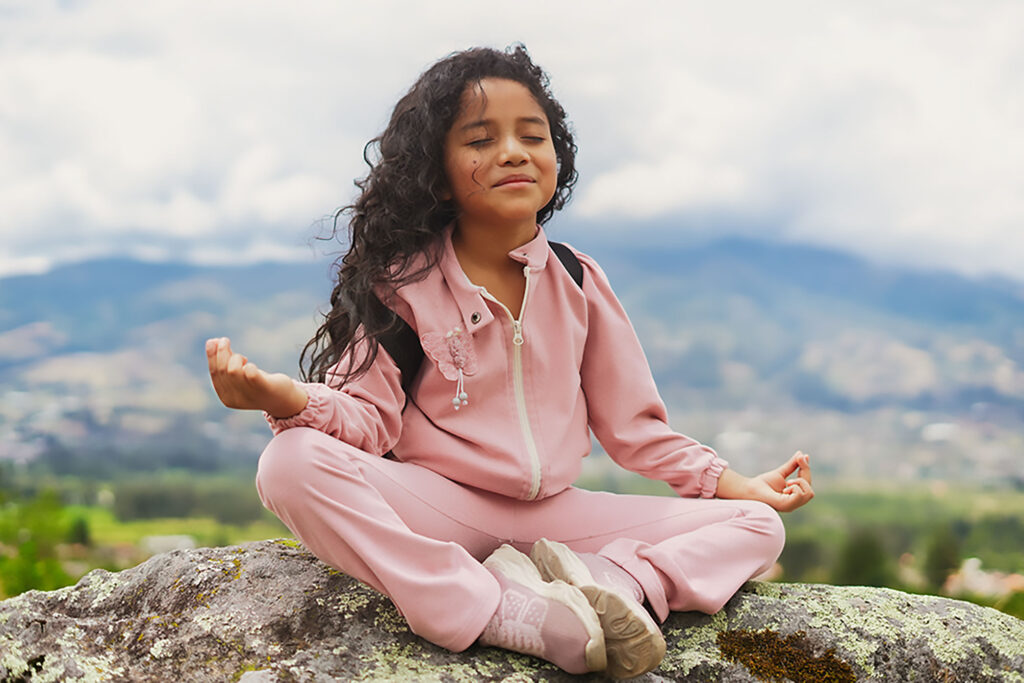
In today’s fast paced schedules, three powerful tools to help slow down and connect with each other are mindfulness, belly breathing, and asking open-ended questions. When these tools are used together, they strengthen emotional regulation, foster deeper thinking, and build trusting relationships.
Mindfulness is a form of meditation in which you practice being present in the moment. It focuses on what is happening in the present without pressure, which reduces stress. To practice mindfulness, take a few moments to notice your senses. Do you feel the ground under your feet, the wind on your face, the warm coffee cup in your hands? Do you hear the hum of the traffic, the birds chirping, the tapping of the rain? Do you smell the coffee brewing, the clean laundry cooling, the neighbor cooking? What emotion are you feeling, and where in your body do you feel that emotion? What does the emotion feel like? Take note of how you are feeling as well, particularly at the start and the end of a mindfulness practice. Mindfulness can be supported by practicing belly breathing and asking open-ended questions. When practicing mindfulness by yourself, these strategies can help your mind and body relax, and can also help you reflect on your feelings. When supporting a child’s mindfulness, the combination of being present and asking questions in meaningful conversations is a powerful tool because it can improve communication skills, increase focus, and help children learn how to self-regulate their emotions.
Below, we will review tips and exercises, along with a few activities you can do at home with your child.
The Positive Benefits of Being Mindfully Present
Mindfulness helps children face challenges with a greater sense of calm, reducing stress and anxiety.
By staying on task, mindfulness can improve concentration, productivity, and focus. By fully engaging the diaphragm, belly breathing increases lung efficiency and oxygen intake, enhancing blood flow to the brain and improving focus, concentration, memory, and mental clarity.
Being present also provides greater appreciation of the now, increasing social-emotional awareness, and improving and strengthening relationships. For example, if a young child is upset because they had a disagreement with a friend, instead of being reactive (screaming, kicking, or feeling misunderstood), the child can be proactive by practicing belly breathing, reflecting on their feelings, and communicating ideas for finding a solution with the help of an adult.
How can you teach belly breathing to your child?
Below are a few steps to teach and practice deep belly breathing with your child:
- Ask the child to notice how they are feeling currently, notice how they are breathing, and find a comfortable position, like sitting, standing, or lying down
- Have the child place one hand on their belly or above the belly button and one hand on their upper chest
- Ask the child to take a deep breath in through their nose
- Then ask the child to breathe slowly through their mouth
- Encourage a slow exhale, and ask the child to pretend to blow out their birthday candles
- After taking several deep belly breaths, ask the child to reflect on how they feel and if they notice anything different
Tips: Practice belly breathing daily when the child is calm and adapt the practice to include techniques that work best for the child (count, sing, or hum to their favorite tune) during the breathing pauses.
Please visit our CHS activity guide materials to learn about Bunny Breathing and discover Social Emotional activities.
Asking Open-ended Questions
Open-ended questions encourage detailed responses instead of simple “yes” or “no” answers, supporting deeper and more meaningful conversations, while also increasing language and critical thinking skills. Asking positive and non-judgmental questions builds trust and makes it safe for the child to share their thoughts and ideas.
Some examples of open-ended questions are:
- What’s your favorite thing about today?
- How can we work together to solve this?
- Tell me about what happened in the story.
- What do you think will happen next?
Methods on How to Role-Model and Ask Open-ended Questions
- Be a mindful listener. When the child is speaking, give them your full attention, get down to their eye level, and listen to them without planning your response
- Ask questions that start with “what,” “how,” or “tell me about.” Frame questions around the child’s direct experiences. Examples include, “What are you noticing in your body right now, after you fell? Let us take a moment to breathe”
- Modeling curiosity demonstrates that you are genuinely interested in their experience(s) by asking follow-up questions that prompt further exploration. Examples include, “What do you remember about the story yesterday?” “How do you think the dog felt?”
Combining belly breathing with open-ended questions can provide a healthy approach to a child’s overall well-being. The physical practice of belly breathing addresses the physiological aspects of stress while grounding the child in the present moment and helping to manage those big feelings. Meanwhile, the mental practice of asking open-ended questions helps process thoughts and express emotions, promoting mental clarity and personal growth.
Below please find further resources that are fun and interactive for you and your child.
Recommended Books, Activities, and Videos
Alphabreaths: The ABCs of Mindful Breathing | Christopher Willard & Daniel Rechtschaffen
Belly and Ballons Breaths Worksheet
CHOC|CopingSkills_Belly-Breathing.pdf
CHOC| Mindful Breathing Mediation: Belly Breathing
Ellie the Elephant Takes Deep Breaths| Michael Yadao-Evans LMFT
My Magic Breath Finding Calm Through Mindful Breathing| Nick Ortner and Alison Taylor
Model Lung – Find Out How Lungs Work – Science Experiments for Kids
Sesame Street: Learn to Belly Breathe with Rosita
Resources and References
Children’s Home Society of California Activity Guides Belly Breathing
Children’s Home Society of California Activity Guides Social Emotional
Mindfulness exercises – Mayo Clinic
Self-Regulation: Definition and Skills to Practice
Teaching Young Children Message in a Backpack Asking Questions to Stretch Your Child’s Thinking
7 Fun Deep Breathing Exercises for Kids – Mental Health Center Kids