
As child care providers, documentation may seem overwhelming at times when you are trying to balance high-quality care, manage a business, and develop meaningful relationships with the children and families in your care.
With consistent training, early childhood education (ECE) assessments are among the many tools that can assist child care providers in understanding and supporting young children through the structured guidance in the assessment results. Many of these assessments are designed to be part of a continuous cycle that supports lesson planning and identifies trends and needs in the program. As individual children’s needs or the whole group’s needs are identified, you, as the child care provider, can focus on creating an enriching child-led environment that engages children rather than managing undesirable behavior that is often the result of boredom or frustration.
A few examples of early childhood assessments are:
ASQ-3 (Ages & Stages Questionnaires): A developmental screening tool that parents or child care providers complete at certain ages, like 9, 12, or 18 months, to spot possible delays early.
Head Start ELOF (Early Learning Outcomes Framework) sets federal learning standards and outlines what children should know and be able to do from birth to age 5.
DRDP 2025 (Desired Results Developmental Profile) observational tool that is used to document children’s progress across different learning areas over time and in different situations or settings.
These tools provide structured guidance on what information to collect, such as:
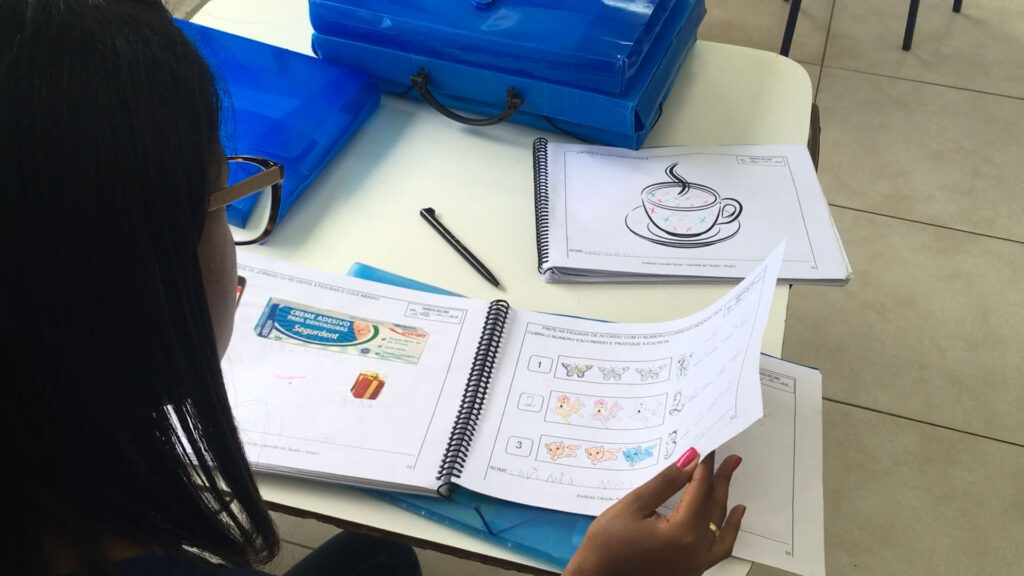
Observational notes: These are short, factual descriptions of a child’s behavior, language, and interactions during play, commonly supported by developmental checklists and collections of a child’s artwork, writing samples, photos of completed work, and quotes that show progress, collectively known as the child’s portfolio. These are small treasures for parents that they usually get to keep at the end of the year so they can see firsthand how much their child has grown.
Many developmental tools are research-based and use play-based observations to capture real development, such as:
- Personalized instruction: Child care providers can adjust daily activities to fit each child’s current skills and interests
- Track developmental milestones: Educators can monitor children’s physical, cognitive, social, and emotional development as they grow (daily, weekly, monthly, yearly) to ensure steady growth is happening
- (Special Needs) Developmental screening: Finding concerns early provides specialized and supportive help
- Strengthens family relationships: Sharing consistency, quality, and clear information about a child’s development helps connect learning at home and at school
A child-led environment and early childhood assessments form a continuous feedback loop. One really cannot function effectively without the other. In a child-led environment, the play is the learning, and the child care provider’s observations provide the assessment data. For example, observed play provides authentic data, meaning children show what they know when they are relaxed and playing freely.
If you ask a child to sit down and count flashcards, they might freeze up or lose interest after a few minutes. In a child-led environment, you can observe that same child in the dramatic play area naturally counting out four bananas for their “restaurant” guests. The child-led setup reveals their genuine, functional math skills for your observation, as well as a great opportunity to observe their social skills and relationships.
It frees the teacher up to observe; you cannot take meaningful assessment notes if you are busy managing a rigid, teacher-directed activity. When the environment is set up so children can independently select, use, and put away materials, you are no longer tied to managing behaviors or directing traffic. Because the children are engaged and independent, you can step back with your clipboard or tablet to take meaningful observations. You can spend five focused minutes quietly jotting down observational notes on how two toddlers negotiate sharing a truck, tracking their Social-Emotional Development (SED).
A child-led environment is only educational if the materials challenge the children. Assessments tell you exactly what materials to add or remove. You use assessment results to inspire new learning by frequently altering the environment. For example, the ASQ or DRDP notes show that several preschoolers have mastered simple 4-piece puzzles but are struggling with fine-motor pencil control. For next week’s lesson, you would modify the child-led art environment by adding tweezers, large beads, and a more complex 8-piece puzzle to naturally challenge those specific skills.
These tools can replace guesswork with clear records, which can help educators notice each child’s unique strengths and needs, build trust with families by holding meaningful conversations with real notes, photos, and work samples that connect the home and classroom, and attract families by improving the quality of the program.
References:
CDC’s Developmental Milestones | Learn the Signs. Act Early. | CDC
DAP: Observing, Documenting, and Assessing Children’s Development and Learning | NAEYC
DRDP (2025) | Desired Results For Children And Families
Free Resources – Ages and Stages
Head Start Early Learning Outcomes Framework | HeadStart.gov